CONTENT
Poultry Feed Additives: Functions and Classification
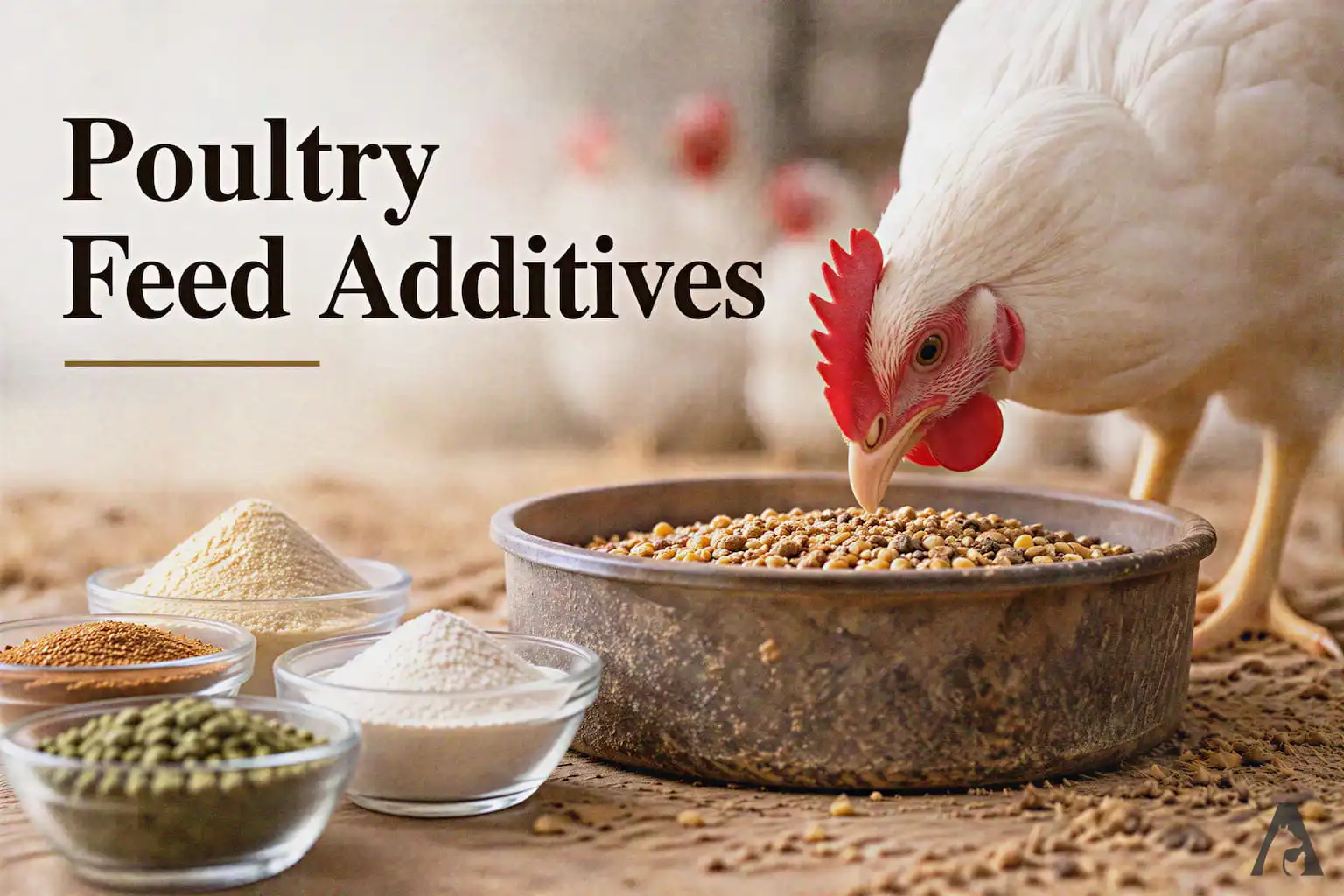
Poultry feed additives are substances incorporated into poultry diets in small quantities to improve feed quality, nutrient utilization, bird performance, and overall health. Depending on their specific function, feed additives may provide essential nutrients or exert non-nutritional effects, such as improving feed stability, palatability, gut health, or feed efficiency.
A feed additive or supplement is a substance or mixture of substances other than bulk and basic feedstuffs. It is used in small quantities, usually at less than one percent of the compounded feed, to supplement certain nutrients and non-nutrients, improve feed quality, and enhance the performance of the birds fed.
Functions of Feed Additives
Different feed additives perform different functions. They are added to poultry feed in order to:
- Prevent various deficiency diseases, other diseases of nutritional origin, and certain bacterial and parasitic diseases;
- Improve the nutritive value of the feed and feed efficiency;
- Improve growth rate and egg production;
- Protect birds from stress and improve their immune status;
- Prevent spoilage of feed due to microbial activity, rancidity, and other physical conditions;
- Enhance the color, flavor, palatability, and general appearance of the feed, making it more attractive to both the producer and the bird;
- Help prevent caking and dustiness and reduce feed loss during storage, handling, and feeding;
- Improve egg yolk color, shell thickness, and meat quality;
- Have a nutrient-sparing effect and prevent nutritional imbalances;
- Certain non-nutrient feed additives cause thinning of the gut wall and thereby facilitate better absorption of nutrients.
Based on their functions, feed additives are broadly classified into two categories, namely: