CONTENT
Offences Against Animals: Mischief, Bestiality, and Cruelty
Offences against animals are an important aspect of veterinary forensic medicine and jurisprudence. Veterinarians should be familiar with common offences such as mischief, maiming, bestiality, and cruelty, as well as the characteristic findings that may assist in their recognition and examination. Knowledge of these offences also helps veterinarians understand their professional and legal responsibilities in cases involving animal abuse, injury, or unlawful acts.
It is more or less obligatory for a veterinarian to be familiar with the laws concerning the protection of animals, particularly because of the training and profession, which inculcate a spirit of sympathy and understanding toward our animal companions, including domestic animals, who deserve all sympathy and kindness.
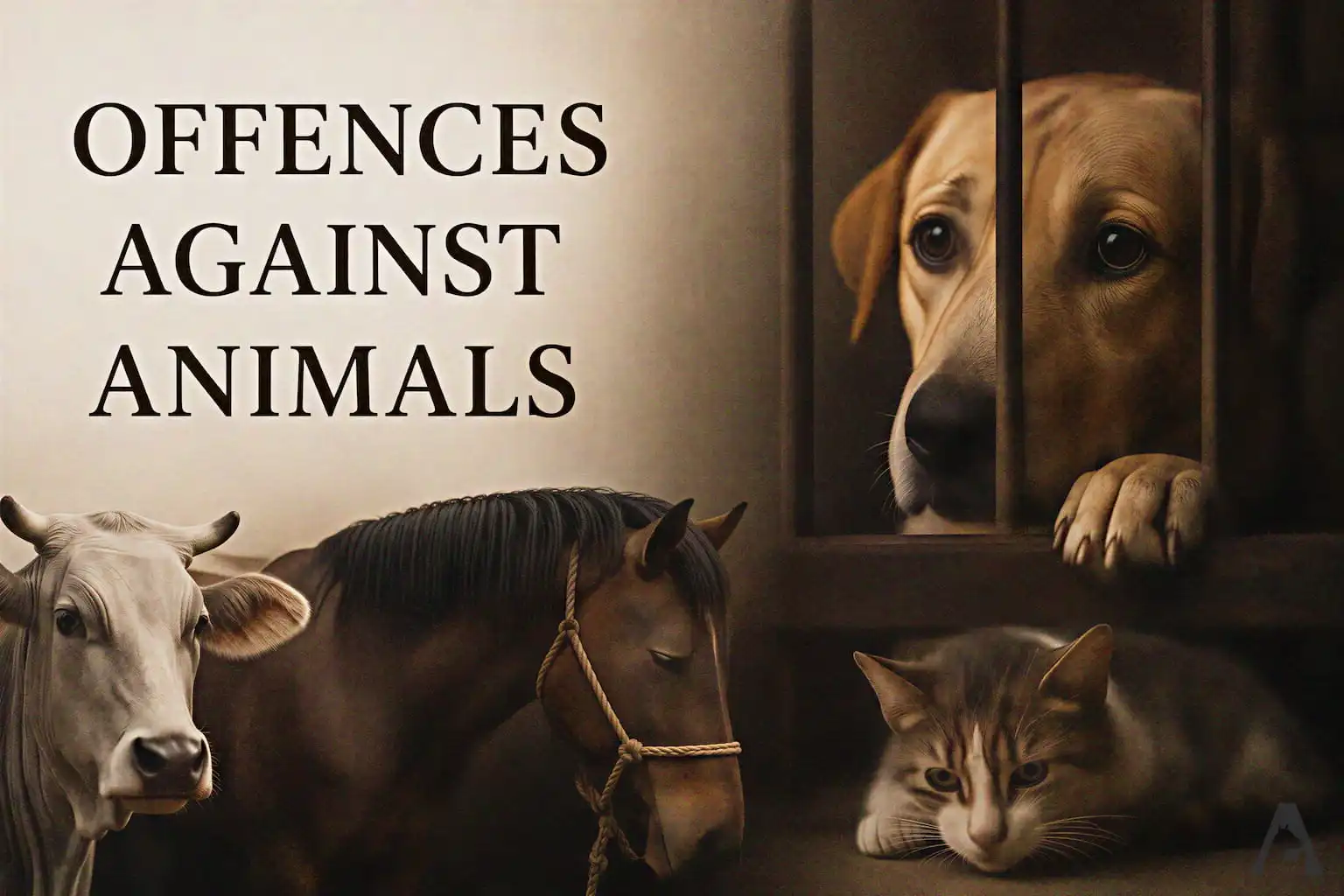
The common offences against animals are:
- Mischief
- Bestiality
- Cruelty
Mischief
Mischief includes killing, poisoning, or maiming an animal. Poisoning is the most common method of malicious killing. Abrus precatorius seeds, arsenic, aconite root, snake venom, datura leaves, and yellow oleander seeds are common poisons used in the malicious killing of animals.
Maiming
Maiming means making an animal permanently useless through the use of violence. This type of offence is also common, and its aim is to harm the owner when his animal damages crops or other property.
The common forms of injuring animals and rendering them useless are:
- Fracture of a bone
- Cutting of the tendons of the legs and neck
- Injury to the udder in dairy animals
- Tearing of the vagina or rectum by introducing a sharp or blunt object
- Puncture wounds, etc.
Bestiality
Bestiality means carnal intercourse between a human and an animal, against the order of nature.
This type of crime is quite frequently found in India due to the following reasons:
- The common belief among illiterate people that intercourse with a female donkey is a remedy for gonorrhea.
- Excessive sexual desire with little opportunity for natural intercourse.
- Young villagers who go out to graze cattle in fields far away from human observation may be incited, owing to loneliness and the proximity of animals, to commit this crime.
- People with certain mental abnormalities.
- The human male is generally the active agent, while the passive animal may be a goat, donkey, mare, cow, or even a hen.
Examination of an Animal for Bestiality
The vagina of the animal should be examined for evidence of injury, and the suspect should be examined for marks of injuries caused by the kicks, teeth, or claws of the animal.
The surrounding hair of the animal should be examined for the presence of human spermatozoa. It is very important to determine whether the spermatozoa found are of human origin or from the same animal, and for this purpose, the presence or absence of estrus in the female animal may also serve as a guide.
The presence of organisms causing gonorrhea in the vagina of the animal is considered a definite sign of bestiality.
The clothes of the suspect may smell of urine or feces from the animal, as animals have a habit of urinating after the sexual act.
Cruelty
Cruelty offences include beating, overloading, using a diseased animal for work, starvation, “Phuka,” etc. These acts are punishable under the Prevention of Cruelty to Animals Act, 1960.