CONTENT
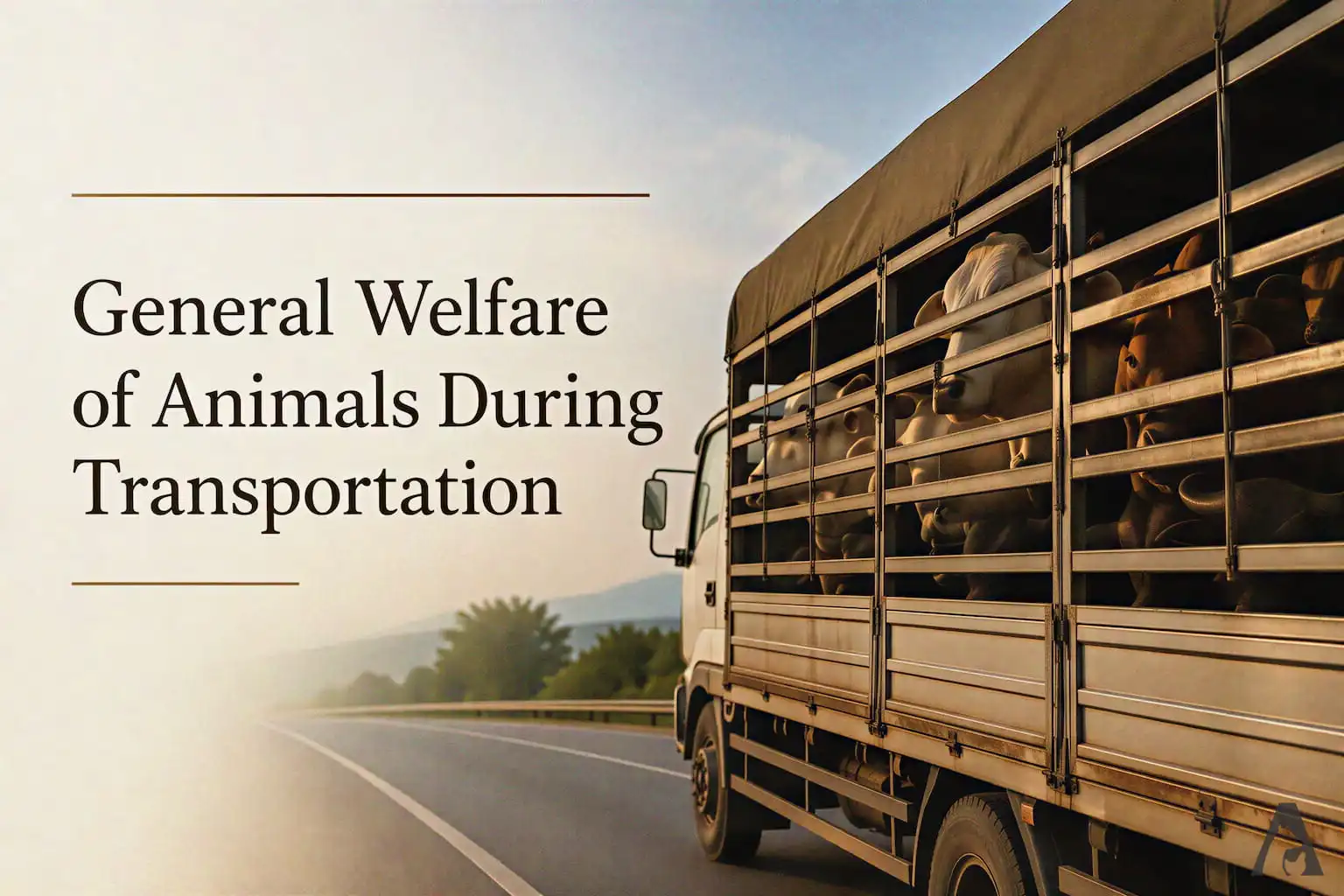
General Welfare of Animals During Transportation
Animal transportation requires careful attention to animal welfare, health, safety, and fitness for travel. Proper transportation practices help minimize stress, injury, disease transmission, and discomfort during transit.
*ADVERTISEMENT*
Contact hello@mkvisuals.org to advertise here
This guide outlines the general welfare requirements for transporting animals, including fitness for transport, segregation of different groups, veterinary certification, loading limits, vehicle requirements, and precautions for the safe and humane transportation of animals.
Rules & Guidelines
- Animals to be transported shall be healthy and in good condition, and such animals shall be examined by a veterinarian to ensure freedom from infectious diseases and fitness to undertake the journey; provided that the nature and duration of the proposed journey shall be taken into account when determining the degree of fitness.
- An animal that is unfit for transport shall not be transported. Newborn, diseased, blind, emaciated, lame, or fatigued animals, as well as animals that have given birth during the preceding 72 hours or are likely to give birth during transport, shall not be transported.
- Pregnant and very young animals shall not be mixed with other animals during transport.
- Different classes of animals shall be kept separately during transport.
- Diseased animals, when transported for treatment, shall not be mixed with other animals.
- Troublesome animals shall be given tranquilizers before loading for transport.
- Animals shall be transported in their on-farm social groups, established at least one week prior to the journey.
- While transporting animals, all applicable rules must be followed, and the animals must be accompanied by a valid certificate from a veterinarian. The rules require stops for water and feed, and specify that no more than six large animals may be transported in a truck or approximately 12 smaller calves.
- Any violation of these laws is considered illegal.
- The vehicle transporting the animals should be large enough to carry them comfortably, and the animals should not be overcrowded or confined in a manner that restricts their movement. The animals should also be protected from adverse weather conditions.
- The permissible loading in a truck is only four buffaloes or 40 sheep or goats. A truck with a wheelbase of less than 142 inches shall not carry more than five cattle without calves or four cattle with calves.
- Trucks with a wheelbase of more than 142 inches shall not carry more than six cattle without calves or five cattle with calves.
- Animals shall not be transported in a tempo.
- Only four passengers, excluding the driver, are allowed on a tonga, or a total load of 325 kg.
*ADVERTISEMENT*
Contact hello@mkvisuals.org to advertise here