CONTENT
Duties of Veterinarians to the Public: Public Health, Livestock and Professional Responsibilities
Veterinarians have important responsibilities not only toward animals and their profession but also toward the public. Their knowledge and training place them in a unique position to contribute to public health, disease prevention, livestock production, food safety, and community welfare.
This includes educating the public, supporting the enforcement of sanitary and public health regulations, reporting communicable diseases, and promoting scientifically sound practices in animal production. Understanding these duties is an essential part of veterinary professional ethics and responsible veterinary practice.
Veterinarian as Citizen
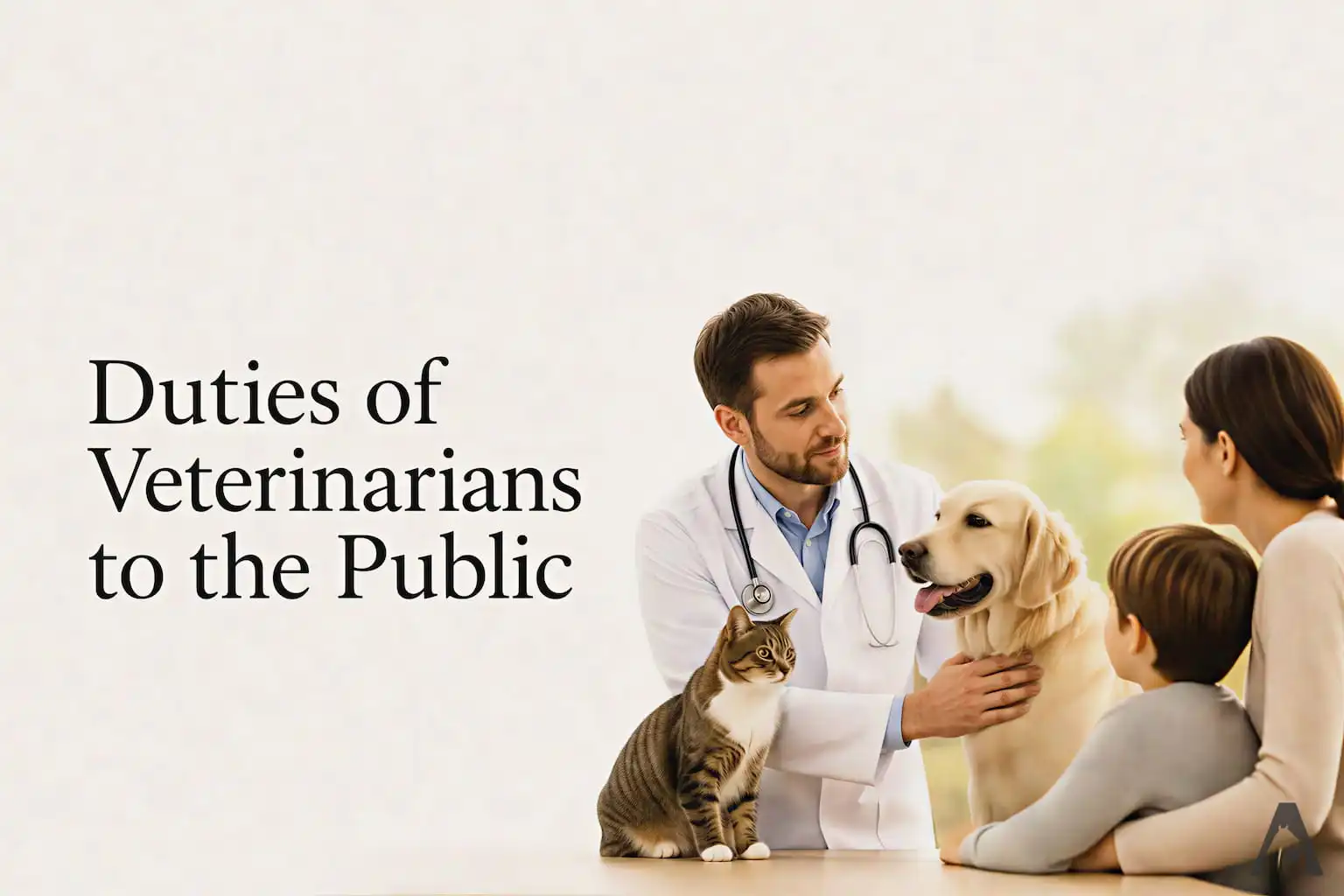
Veterinarians, as good citizens possessing special training, shall advise concerning the health and husbandry of animals in the localities where they dwell. They shall play their part in enforcing the laws of the community (without favoring any communal overtones or prejudices) and in supporting institutions that advance the interests of humanity. They shall cooperate with the authorities in the public interest.
They shall cooperate with the authorities in the observance and enforcement of sanitary laws and laws relating to drugs, poisons, and pharmacy, made for the protection of health.
Public Health
A veterinarian engaged in public health work shall enlighten the public concerning quarantine regulations and measures for the prevention of epizootic, zoonotic, and foodborne diseases and intoxications, as well as communicable diseases. At all times, veterinarians shall notify the respective authorities of every case of communicable disease under their care in accordance with the laws, rules, and regulations of the authorities.
When an epidemic prevails, the veterinarian shall continue their work without regard to the risk to their own health. They shall endeavor to ensure the hygienic handling of animal products and wastes thereof and educate the public about foodborne diseases and intoxications.
Livestock Production and Technology
A veterinarian shall strive for the betterment of animal production through timely advice and promotion of scientific management involving economically viable and hygienic housing, adoption of scientific breeding schedules, routine disease prevention, reproductive health monitoring, hygienic and systematic care before, during, and following parturition, care of newborns, hygienic collection of farm products, and proper disposal of animal products and wastes thereof.
They should strive to educate the public and para-veterinary personnel regarding timely insemination and aseptic handling during A.I. and discourage unscientific and unhygienic insemination practices.