CONTENT
Desired Characteristics of Indigenous Poultry for Rural Farming
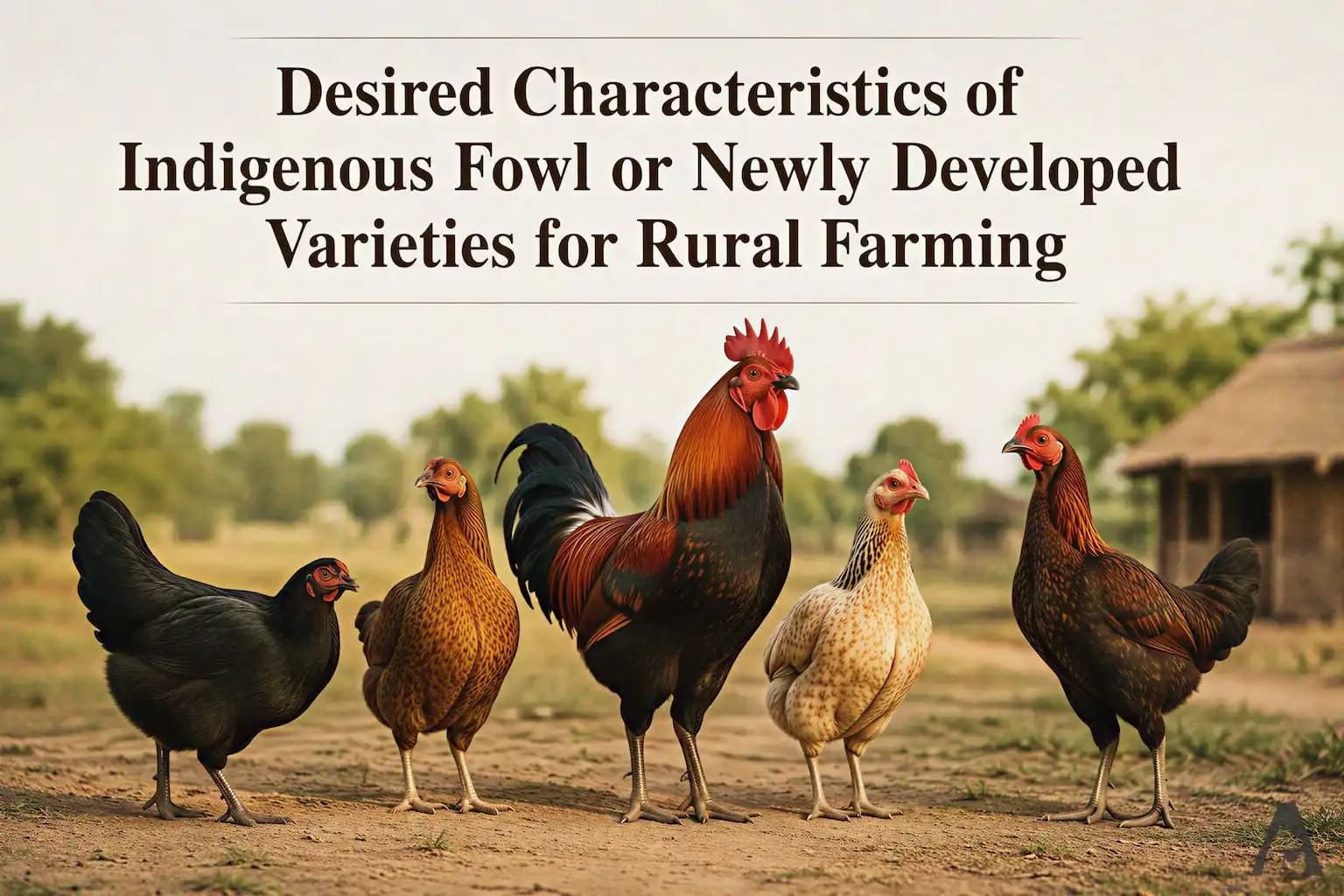
Indigenous poultry and newly developed varieties for rural farming should possess specific characteristics that enable them to perform efficiently under low-input and scavenging production systems. Important traits include appropriate plumage color, morphology, temperament, productivity, disease resistance, tropical adaptability, and self-propagating ability.
These characteristics help birds survive and remain productive under challenging environmental and management conditions commonly encountered in rural poultry farming.
Colour of the Bird
People in rural areas have a strong preference for colored birds, since colored birds can camouflage themselves and escape from predators. Better immunocompetence has been reported in colored birds compared with those with white plumage.
Morphology and Temperament of the Bird
A lighter bird with long shanks and strong wings has a greater chance of escaping from predators. A bird that exhibits aggressive behavior is more advantageous.
Productivity of the Birds
A lighter bird will be able to cover a larger area to scavenge for nutrients that are not easily available.
Disease Resistance
Birds used for scavenging must have better immunocompetence, as there is limited availability of good-quality food and drinking water, and they have to roam in unsanitary surroundings in search of food. In addition, appropriate prophylactic measures may not be possible in remote areas.
Tropical Adaptability
Tropical-oriented major genes might be desirable for better productivity in tropical environments. It would be desirable to incorporate such genes into newly developed birds for scavenging.
Self-Propagation
Self-propagating capacity is an essential requirement for scavenging birds, as it might not be possible to obtain replacement chicks from a hatchery in remote areas, and financial constraints may also limit their availability. The characteristic of broodiness will be essential to achieve this objective.