CONTENT
Beak Trimming in Chicks: Procedure, Timing, Benefits and Management
Beak trimming is an important management practice in commercial poultry production, particularly in layer flocks, to reduce feed wastage, injurious pecking, and cannibalism. Proper technique, timing, and post-trimming management are essential to minimize stress and maintain normal feeding and drinking behavior.
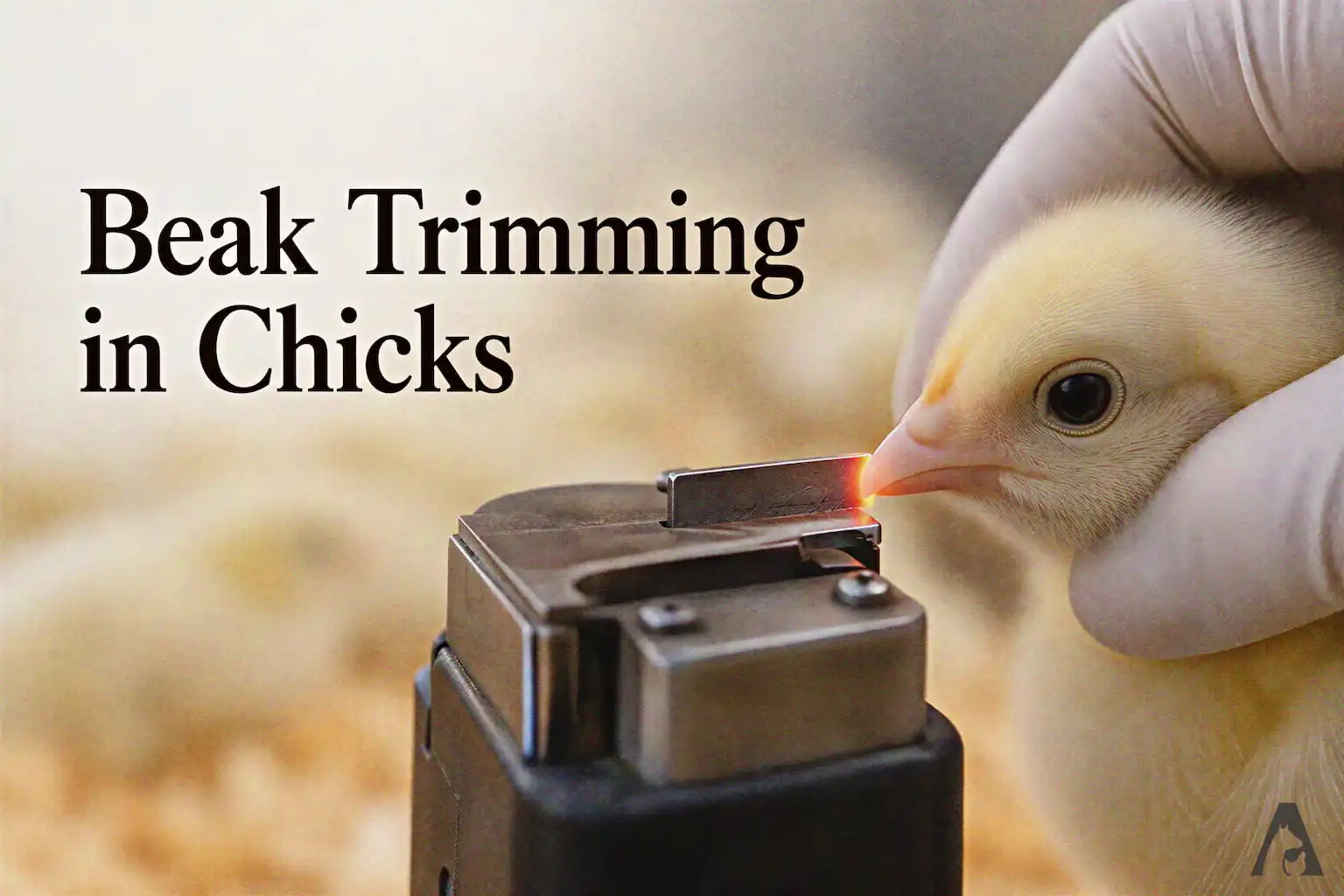
To avoid feed wastage, the chicks are debeaked. Their beaks are shortened by electrical cauterization. Debeaking, if carried out properly, may be performed only once during the fourth week. It may also be performed at the end of the second week and repeated at 12–14 weeks. The upper beak should be cut to 2/3rds and the lower beak to 1/3rd of its length.
Procedure and Management of Beak Trimming
The cut portion should be cauterized by touching it to the hot plate. The tongue should be carefully held back. Undertake debeaking during the cooler parts of the day. Provide anti-stress B-complex vitamins and vitamin K in drinking water before, during, and after the day of debeaking; adjust the feeder and waterer height to be lower than before to suit the shortened beak.
Engage experienced personnel to perform debeaking properly, with less stress and to avoid the need for repetition. Since layer chicks are comparatively more active, they tend to peck at each other’s backs (cannibalism), causing injury and death. Beak trimming (debeaking) helps prevent such instances.
Benefits of Beak Trimming
- Reduces feed wastage and improves feed utilization.
- Helps control injurious pecking and cannibalism.
- Reduces feather pecking and associated injuries.
- Helps minimize mortality caused by severe pecking and cannibalism.
- Promotes more uniform flock management.
- Reduces damage to the skin and tissues caused by aggressive pecking.
Vaccination, Biosecurity, and Medication After Beak Trimming
Vaccines to be given to the birds at this brooding stage are listed in the vaccination schedule table. Follow other disinfection methods and biosecurity measures to avoid disease outbreaks and control mortality.
Take care to purchase quality vaccines that are kept under proper storage conditions. Ensure proper dosage according to the manufacturer’s specifications. Vaccinate the birds with minimal stress. Medication for layer chicks includes glucose and electrolytes on the first day and a mild antibiotic/antibacterial agent along with vitamin supplements for the first five days; thereafter, no medication is required unless warranted.
Prepare a premix of the weighed quantity of medicine in a limited quantity of water and then thoroughly mix it into the bulk of the water. Medication can also be administered through feed.