Animal Crate and Transport Cage Requirements for Safe Animal Transport
Properly designed animal crates and transport cages are essential for the safe and efficient transportation of animals. They should provide adequate ventilation, stability, and protection while minimizing the risk of injury, escape, or unnecessary stress. Crate design and handling requirements vary with the species, size, and method of transport, and appropriate provisions should be made for bedding, hygiene, feeding, watering, and secure handling during transit.
Animals should be confined in appropriately sized crates or transport cages during transport to facilitate handling and minimize the risk of injury. The dimensions should allow the animal to stand, sit, or rest in sternal recumbency, as appropriate for the species, without providing excessive space for turning or somersaulting.
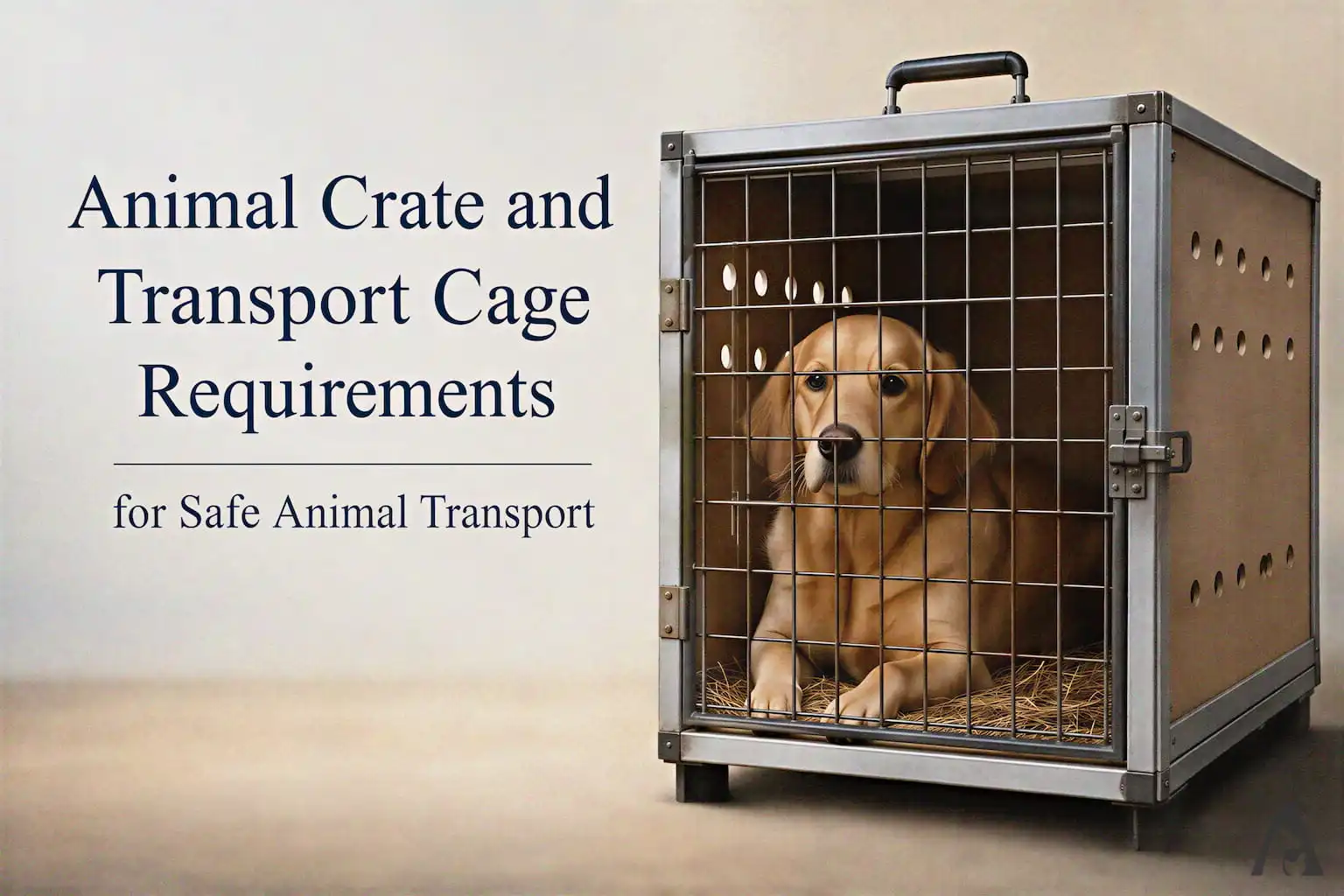
The basic considerations are as follows:
- A crate should be designed according to the requirements of the species and should be portable, lightweight, and easy to maneuver.
- Crates should be constructed with an aluminum/light metal/wooden frame and plywood or laminated plywood. They should have hinged handles so that the container can be loaded and unloaded with ease.
- The size of the crate should be such that the animal can only stand or sit in it or lie in sternal recumbency. It should not be able to turn or somersault.
- The crate should be rectangular in shape.
- The crate should be well ventilated, and it should be ensured that the extremities of the animals do not project out.
- Do not use lead-based paints for painting crates. As far as possible, crates should not be painted inside, but the surface should be smooth.
- Crates should be properly disinfected prior to transport. When birds are being transported, it should be ensured that the crates are free of any fungus. This could be achieved by placing the cage in the sun for a couple of days before use. Fungus can grow in crates that have not been used for some time and can be very harmful to birds, especially birds of prey.
- Temporary facilities should be provided for feed and water. For example, in the case of transport by air, containers should be fabricated in conformity with the size and weight specifications of the aircraft. Different aircraft have cargo holds with doorways of different sizes.
- Facilities should be provided for cleaning excreta.
- Bedding of paddy straw, sand, etc., should be provided, and the floor may be peg-bored to avoid slipping. In the case of birds, the floor should be covered with sand, sticks, or just AstroTurf. No perch should be provided in the cage.
- Padding with gunny bags filled with paddy straw, coir, or foam/cotton cushions should be provided in crates used for herbivores. Cages used for birds do not require any padding. Nails, wooden splinters, protrusions, sharp edges, and sharp objects should be removed from the inner surfaces of the container.
- Hinged (foldable) handholds or handles should be provided on the sides for easy handling. At the same time, it should be ensured that the handles fold away and remain flush after loading so that the cage can be secured and prevented from shifting during transportation.
- In the case of deer, antlers and antler tips may be taped with padding/cushioning to prevent injuries and breakage during transport.
- Only well-trained/experienced handlers/attendants/keepers should be assigned to the task.