CONTENT
Japanese Quail (Coturnix japonica): Breeds, Meat and Egg Production
The Japanese quail (Coturnix japonica) is an important domesticated quail species widely used for meat and egg production, as well as in laboratory research. It is characterized by rapid growth, early maturity, efficient production, and distinctive plumage and egg characteristics. Several recognized varieties are raised for different production purposes, making the Japanese quail valuable in both commercial poultry production and experimental studies.
Males weigh less than females, and the color of the feathers in the breast region is plain rust-colored in males, while in females, it is speckled.
Japanese quail eggs have a mosaic pattern.
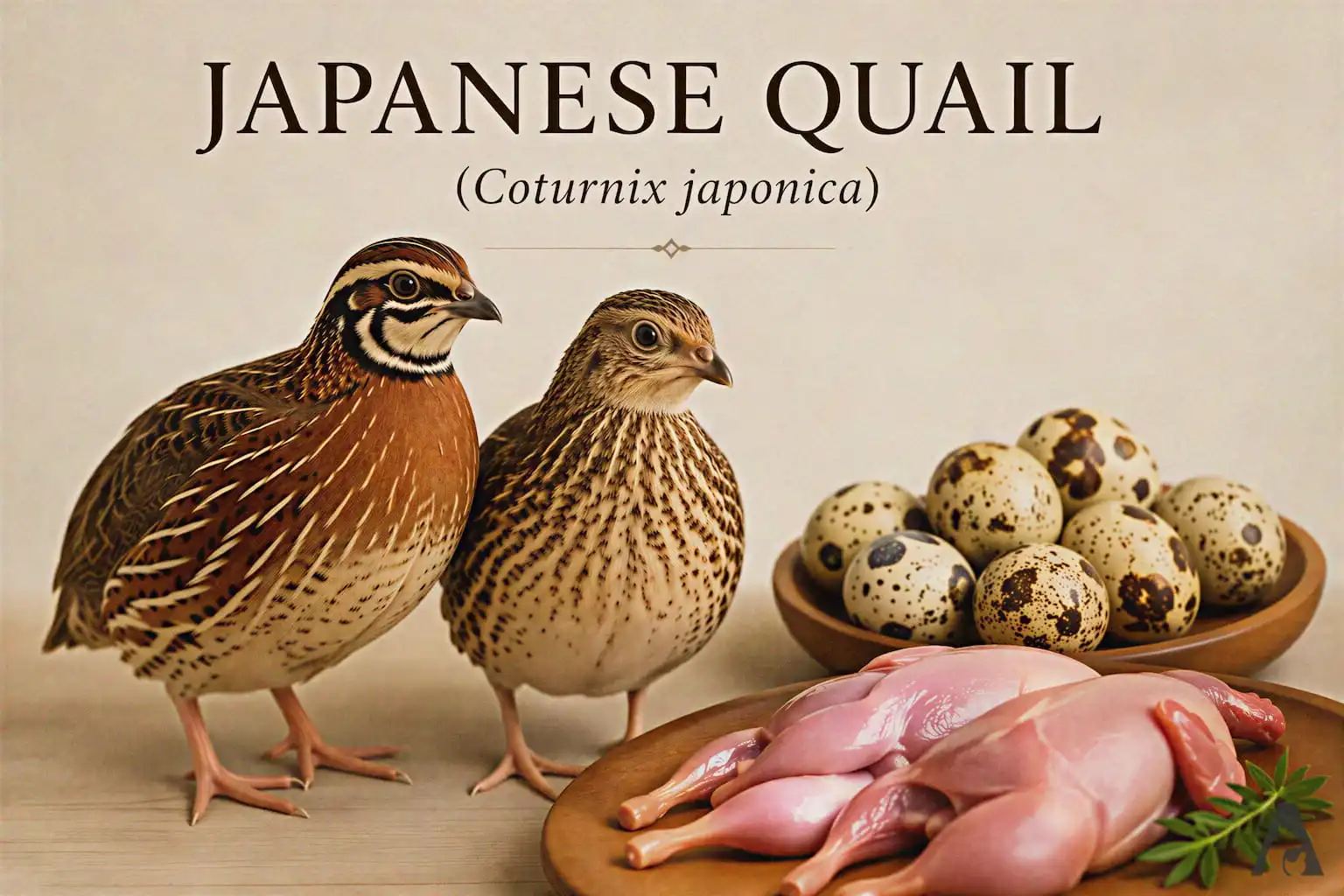
The known breeds of Japanese quails are:
- Manchurian Golden
- British Range
- English White
- Tuxedo
Japanese Quail Meat
Japanese quails can be marketed at five weeks of age as live birds or as dressed or cleaned meat. The practice of hot-water dipping and defeathering is not followed. Instead, after the birds have been bled by slitting the neck, the skin is removed along with the feathers.
It is not advisable to market Japanese quails weighing less than 150 g.
Cleaned meat accounts for 70–74 percent of the live body weight. Quail meat contains more protein (22–24 percent) and less fat (about 2 percent) than most other types of meat, such as mutton and chicken. Therefore, it is considered suitable for growing children and young adults, as well as convalescing and health-conscious adults.
Quails have a higher proportion of meat in the breast region (41 percent) and also contain a high amount of calcium.
Japanese Quail Eggs
Quail eggs are tasty and contain more yolk than chicken eggs. They can be served as boiled eggs for table consumption, and children are very fond of them. Quail eggs contain higher proportions of high-quality protein and fat. They can also be sold after pickling.