CONTENT
Cannibalism in Poultry: Causes, Signs and Prevention
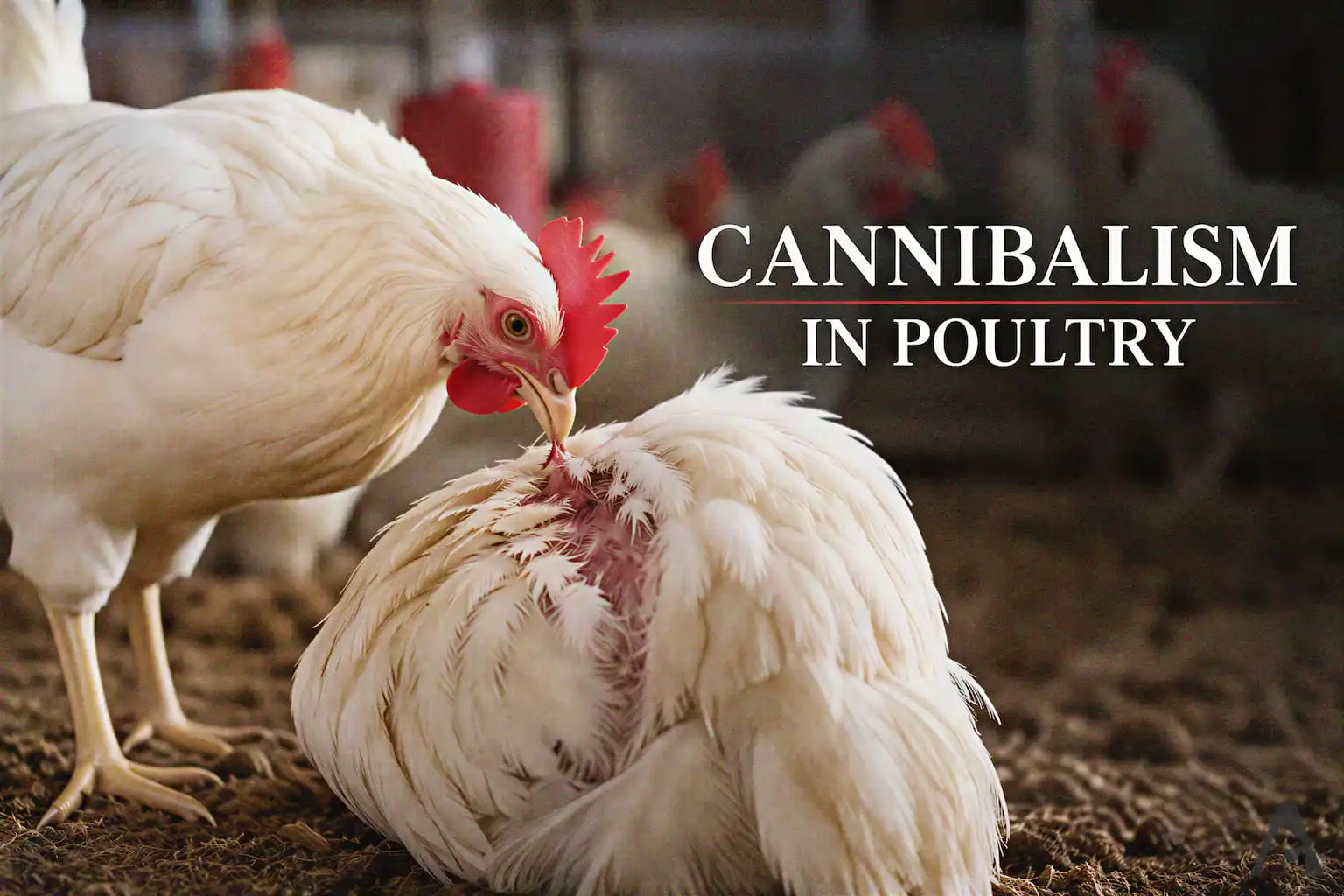
Cannibalism is a problem associated with large poultry flocks where birds kept in close confinement peck at other birds. This can result in significant mortality within the flock when wounds are generated, and it can also cause a decrease in egg production as the pecked birds become stressed.
This is a vice that is usually precipitated by certain improper aspects of management or the environment to which the birds are subjected. Under intensive management, this condition can occur in birds of all ages and in many species. It has been determined, however, that light breeds, such as Leghorns that are used in table egg production, are more susceptible than heavier breeds.
These lighter breeds are characterized by their flighty nature and are hypersensitive to environmental factors.
The behavioral problem of cannibalism in the poultry industry can include the following vices:
- Toe picking in chicks
- Feather pulling in older birds from the head, tail, or body
- Vent picking in older birds
Feather pulling and vent pecking may be difficult and time-consuming behaviors to observe in a flock, but cannibalism can be clearly recognized when culled birds or mortalities in the flock have had much of the intestine removed through the vent.
Cannibalism can also take a number of forms among the birds in a flock and can be presented in the following ways:
- A dominant bird pecking at a more submissive member of the flock
- Mutual pecking where birds in close proximity peck at each other
- On rare occasions, young chicks may peck their own toes
Causes of Cannibalism
The causes of this vice are not well understood, but the onset of cannibalism has been attributed to a number of factors, which are outlined below:
- The problem may simply arise because of the normal pecking behavior of this type of animal when searching for food or exploring an environment. Birds kept in crowded conditions have nothing other than their pen mates to peck. Once one hen has picked up this technique, other hens observing the behavior will learn from the initial pecker, and a serious episode will develop.
- A lack or deficiency of nutrients in a poultry ration may result in the birds becoming irritated, which can subsequently lead to cannibalism in the flock. Usually, an imbalance in protein or sodium levels or insufficient feeding and water space can cause cannibalism.
- Deficiencies of arginine and methionine are thought to be more responsible for the development of cannibalistic activity. An abrupt change in the palatability or form of a flock’s ration may also be a contributing factor.
- Poor ventilation, high temperature, low humidity, excessive population density, and excessive illumination are all factors in the flock’s environment that may precipitate an outbreak of this vice, especially in lighter breeds.
- During egg laying, the cloaca may become damaged and distended, especially with the passage of large eggs, and this protrusion of the vent may be an attractant to other birds due to its stark color difference against the white body.
- Loss of feathers from the body or hemorrhage from the skin due to parasitic infestation may predispose birds to cannibalism.
Prevention
The onset of this vice can be prevented by paying particular attention to dietary factors (protein, sodium, and palatability), environmental factors (ventilation, temperature, humidity, population density, and lighting), and the feeding and water space available for each bird.
In highly intensive operations, the light intensity should be reduced, perhaps by changing to a light with a red hue. The most common and cost-effective mode of prevention is the use of beak trimming.
Other control methods include increasing feed availability, reducing group size, adding litter, and providing distractants such as straw bales. Laying nests must be built in peaceful, isolated places because the congested external genitalia of layers following laying attract other birds and may lead to cannibalism. Provision of red bulbs near laying nests may help during the period of the problem.
The quantity of vitamin and mineral mixture and salt may be marginally increased in the poultry ration. An increased amount of methionine in the diet is said to prevent this habit in layers.
It should be remembered when approaching a problem of cannibalism in the poultry industry that the best method of control is to prevent it from starting at all, since once it has begun, it will be very difficult to stop.