CONTENT
Dehorning and Disbudding in Livestock Animals
Dehorning and disbudding are common management practices in livestock farming carried out to prevent injuries to animals and handlers, reduce fighting among animals, and make handling and transportation easier.
Dehorning means the removal of well-grown horns. Disbudding means arresting horn growth at an early age, when the horn root is in the bud stage.
Dehorning is the process of removing fully developed horns from animals. It is usually performed in older calves or adult animals after the horns have grown and become attached to the skull. Dehorning can be done by surgical removal, dehorning saws, dehorning shears, or other mechanical methods.
Disbudding is the process of destroying or removing the horn-producing cells at an early age before the horns become attached to the skull. Disbudding is easier, less painful, and causes less bleeding than dehorning. Common methods include hot iron disbudding, chemical disbudding, and electrical methods.
Note
Horns are generally not essential in modern livestock management systems and may increase the risk of injuries.
Purpose
- Dehorned animals will need less space in the sheds.
- Cattle with horns inflict bruises on each other that may result in heavy economic losses.
- Horned animals are a danger to the operator.
- Dehorned animals can be handled more easily.
- Prevents the occurrence of horn cancer.
Optimum Age
- Optimum age for disbudding: 15 to 20 days
- Optimum age for dehorning: After 2 to 3 months of age
Methods
- Hot iron method
- Elastrator
- Chemical method
- Dehorning saw or clippers
1. Hot Iron Method
A specially designed electric dehorner is used for this purpose. This is a bloodless method, and it may be used in any season.
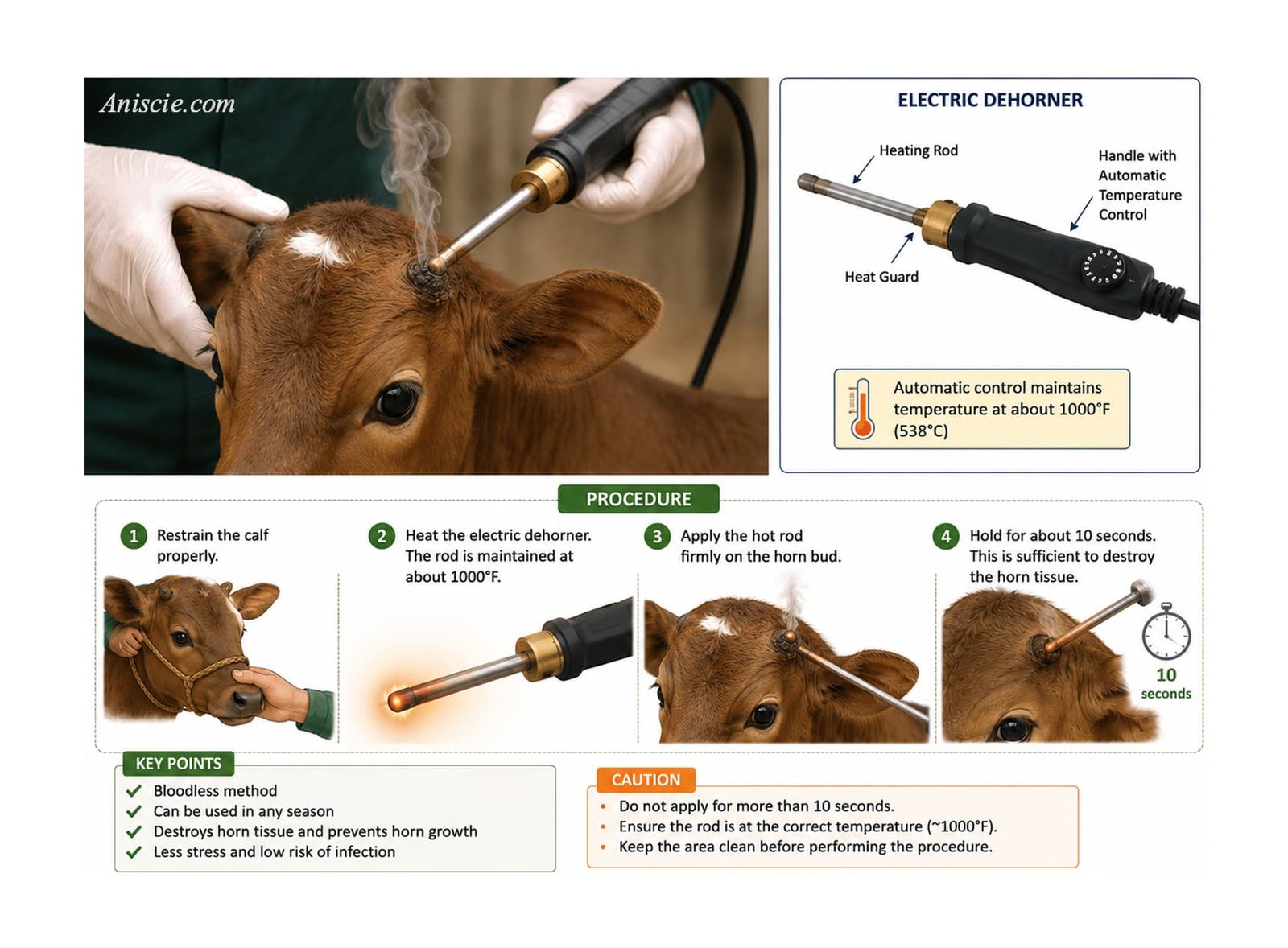
The rod heated with electricity has an automatic control that maintains the temperature at about 1000°F. Applying it to the horn bud for 10 seconds is sufficient to destroy the horn tissue.
2. Elastrator
A specially made thick rubber ring is applied to the base of the horn. The rubber band shuts off circulation, and the horn gradually comes off.
Small buds drop off in 3 to 6 weeks, and large horns may take even 2 months. It is a painful method, and this method is used on cattle when the horn length is about 5–10 cm.
3. Chemical Method
Caustic potash or caustic soda is the common chemical used for dehorning. These are available in the form of paste or solution.
Clip the hair around the horn buds and surrounding area, and apply a ring of Vaseline to protect the eyes against chemicals. Rub the chemical over the buds until bleeding occurs.
4. Dehorning Saw or Clippers
When older cattle are to be dehorned, specially designed clippers or saws are used. A considerable amount of bleeding may follow the operation. To prevent bleeding, the main horn artery should be tied off with a cotton or silk thread. This may be done by sliding a sewing needle under the artery to pull the thread in place before tying.
It is necessary, when sawing or clipping the horns, to take about half an inch of skin in order to get at the horn roots.