CONTENT
Culling of Livestock: Types, Methods and Importance in Animal Husbandry
Culling means removal of unwanted animals from the farm. Regular and periodical culling ensures improvement in the productive stock in the farm. Routine culling reduces the loss and increases the farm profit.
Culling of surplus breeding stock fetches good market prices. Generally, 20–30 percent of the stock should be culled regularly and the old stocks should be replaced with farm born animals. All the male stock should be disposed and breeding males should be introduced from outside to improve the genetic potentiality of the stock.
NOTE
Culling of livestock is an important management practice in animal husbandry that involves the removal of unproductive, diseased, old, or undesirable animals from the herd. Proper culling helps improve herd health, productivity, breeding efficiency, and farm profitability.
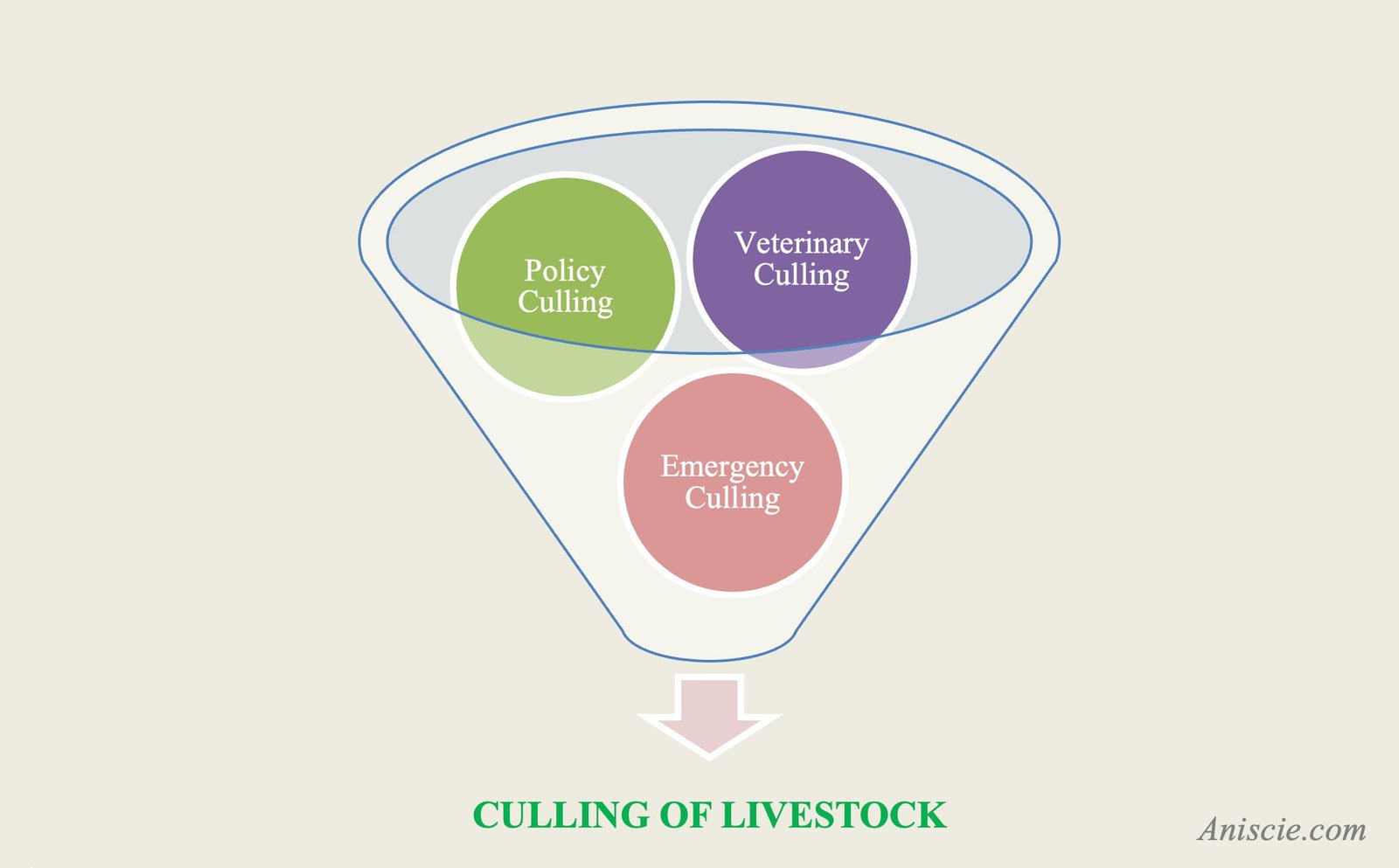
Different types of livestock culling are as follows:
- Policy Culling
- Veterinary Culling
- Emergency Culling
1. Policy Culling
Policy culling is the planned removal of animals from a herd based on production, age, breeding performance, or management decisions to improve overall herd efficiency.
The following categories of animals are to be culled under policy culling:
- Animals not true to the desired breed type
- Animals with unknown parentage where pedigree records are important
- Animals showing genetic or hereditary defects
- Animals with poor production or reproductive performance
- Surplus males and females not required for breeding purposes
- Animals that have completed their breeding usefulness
- Old animals beyond the productive age
- Cattle: above 12 years or after more than 5 calvings
- Sheep and goats: above 6 years, gummer, or broken-mouthed animals
- Swine and rabbits: above 2 years of age
- Work cattle: too old or unfit for draught work
- Animals showing undesirable behavioural vices
- Animals with poor body weight gain or slow growth rate
2. Veterinary Culling
Veterinary culling is the removal of animals affected with chronic diseases, infertility, injury, or poor health to maintain herd health and productivity.
The following categories of animals are to be culled under veterinary culling. All veterinary culling purposes should be supported by detailed case sheets:
- Animals with disorders refractory to treatment.
- Animals incapacitated or unsuitable for normal productive life.
- Weak and debilitated animals (animals losing weight and having static weight during the growing phase, or losing 25 percent or more weight during adulthood, will be recommended for culling under this category).
- Suspected or confirmed cases of animals suffering from contagious, infectious, or zoonotic diseases. In such cases, the disposal of the animals will be as per the rules and regulations prescribed under the Animal Disease Acts.
3. Emergency culling
Emergency culling is the immediate removal or slaughter of animals during emergencies such as disease outbreaks, natural disasters, accidents, or severe feed shortages.
The farm/station heads are empowered for emergency culling in anticipation of approval by the competent authorities in the following cases:
- Animals involved in accidents, predatory attacks, etc., whose prognosis is grave.
- Animals suffering from non-specific diseases whose prognosis is grave.
- Confirmed cases of Tuberculosis, Johne’s disease, and Brucellosis may be destroyed by the farm manager.