CONTENT
Preparation of Animals for Livestock Fairs and Shows: Management, Ethics and Advantages
Preparation of animals for livestock fairs and shows is a management practice that helps present animals in their best physical condition and appearance. Livestock fairs and shows are organized in many countries throughout the world to promote animal husbandry, livestock breeding, and exchange of knowledge among farmers and breeders.
These events provide an opportunity for breeders and farmers to exhibit their animals, compare breeding standards, and learn modern livestock management practices.
Large livestock exhibitions and cattle shows attract participants from different regions and serve as important platforms for genetic improvement, marketing, and promotion of quality livestock.
Preparation of Animals for Livestock Fairs and Shows
- Selection of Animals
- Conditioning the Animals
- Training the Animal for Show
- Clipping
- Hoof Trimming
- Brushing
- Washing
- Blanketing
- Transporting
- Final Preparation
- Showing
1. Selection of Animals
Select only competitive animals to have a chance of winning in their respective age classes in the competition. General body musculature should be given due consideration, along with a well-developed, firm udder in females.
Selection of show animals should be made well in advance. This allows sufficient time to prepare the animals, which may require adjustment of feed intake in some cases, or breeding certain cows to freshen at an appropriate time so that they appear at their best on the show day.
2. Conditioning the Animals
The feeding of show animals is very important for achieving the best results, ensuring that the animals carry an adequate amount of body condition. Thin animals may be discriminated against in comparison to other superior animals and require a longer period of nourishment.
Various grain rations can be used successfully for show animals. In general, rice bran, wheat bran, ground maize, cottonseed meal, and linseed meal constitute a major portion of the ration.
Linseed meal is a very popular feed that imparts gloss to the hair coat and improves skin quality. It is preferable to maintain animals on the same feeding practices that they will receive during the show period.
3. Training the Animal for Show
The animal must be trained to lead and stand properly. It should be trained to walk slowly, taking short steps with its head held up and alert, to stand with its weight evenly distributed on all four feet and with the feet placed in proper position, and to respond to a light touch from the handler.
Proper leading and posing can overcome many minor weaknesses of dairy cattle, such as a slightly weak loin, crooked legs, etc. Improper leading and posing can accentuate these problems. This training should take place well in advance of the show season. In general, younger animals can be trained more easily to stand and lead.
Leading and training should be achieved through patience and gentleness rather than physical abuse. Firm yet gentle control of the animal during the training period is important.
4. Clipping
Proper clipping can enhance the appearance of the animal. Areas that are commonly clipped include the head, ears, neck, tail, udder, and mammary region.
In some cases, leaving some hair on the lower portions of the rump, loin, and neck, shaping the hair to a point over the withers, or clipping some hair from the hocks, legs, and brisket can further enhance the animal’s appearance.
The hair should always be blended smoothly at the junction where clipped and unclipped areas meet. It is advisable to clip the animal approximately one month before the show and then reclip within a few days prior to the show.
5. Hoof Trimming
The hooves of all show animals should be carefully trimmed and shaped. Long toes and misshaped hooves detract from the appearance of the animals and make it difficult for them to walk and pose properly.
Hoof trimming should be performed well in advance (at least 2 to 4 weeks prior to the show). In some cases, animals may become temporarily lame after trimming, particularly those requiring extensive hoof correction.
6. Brushing
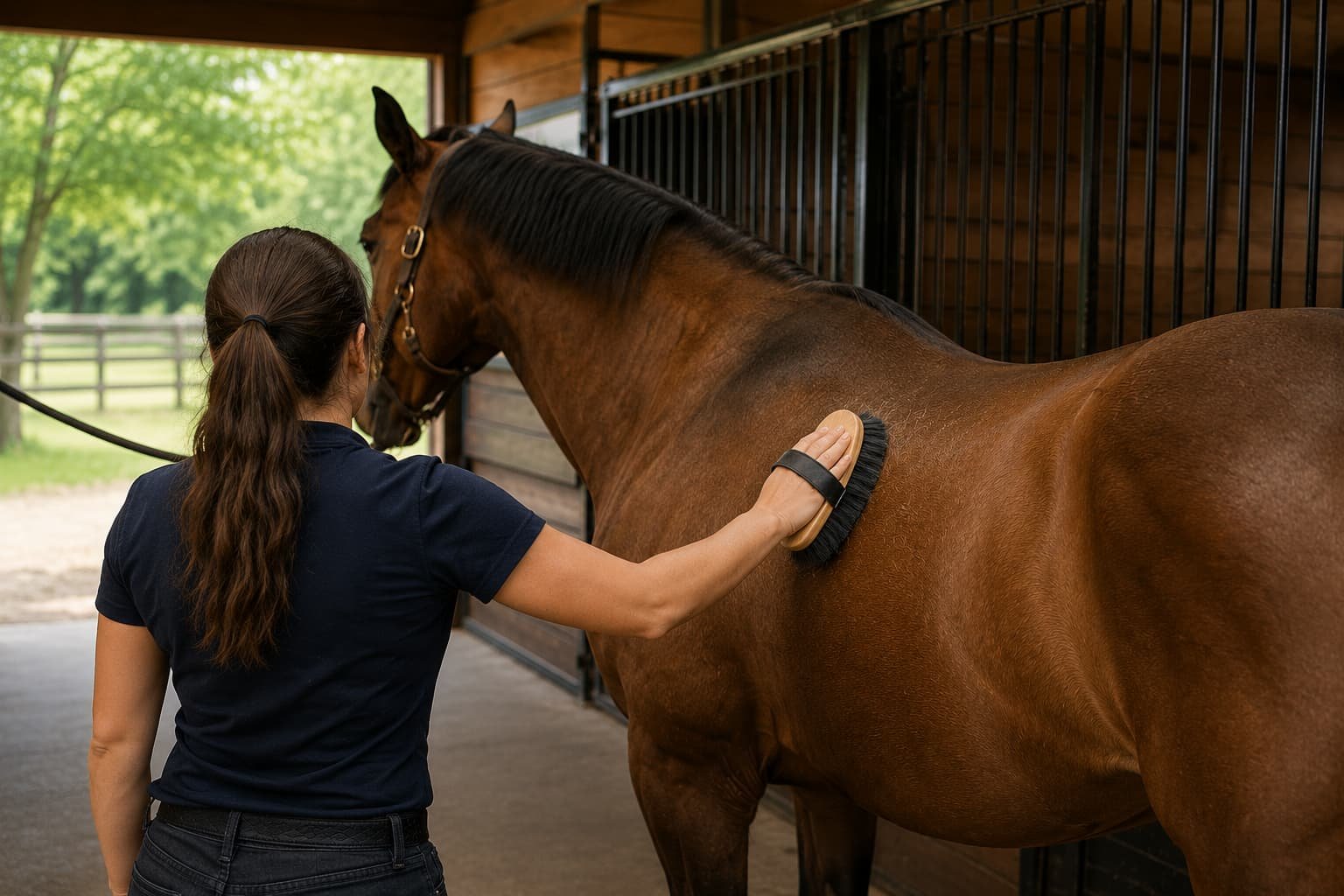
Brushing stimulates blood circulation and helps maintain a glossy hair coat. It also removes dirt, dust, and loose hair.
7. Washing
The animal should be washed with mild soap, and the hair coat should be cleaned thoroughly. It is advisable to keep the animals lightly blanketed to avoid exposure to drafts and cold conditions until they are completely dry. All animals should be washed and allowed to dry before clipping. They should be rewashed within 12–18 hours prior to show time.
8. Blanketing
Blanketing helps keep the hair coat clean and smooth and gives the animal a neat and well-groomed appearance.
9. Transporting
Avoid feeding animals large amounts of concentrates and succulent feeds within 12 hours prior to transportation. This reduces defecation during hauling and helps keep the animals clean upon arrival.
This practice may also increase appetite after arrival and help cattle adapt more readily to feed in the new environment.
It is advisable to reach the destination at least 2–3 days before the actual show or sale. This allows sufficient time for the animals to adjust to the new surroundings and to be brought into optimal condition before the event.
10. Final Preparation
The rules and procedures of a particular show should be studied carefully. Final washing should be performed several hours before show time so that the cattle have sufficient time to dry and eat. The timing of the last milking before the show should be determined according to the milking interval at which the udder appears at its best.
Individual quarters of some cows may not be completely milked in order to achieve better udder balance. It is very important to anticipate the approximate time at which a particular class will be exhibited. The final pre-show milking should be scheduled in accordance with the show time so that the correct amount of milk is present in the udder during exhibition.
Most showmen prefer to feed liberal amounts of hay while withholding water, concentrates, and succulent feeds for a period beginning 12–15 hours before show time. This practice helps ensure a good appetite during the show.
11. Showing
The exhibitor should perform brushing, cleaning, and haltering near the area where the class is scheduled for exhibition. The animal should be led around the ring in a clockwise direction, with the exhibitor holding the halter strap in the left hand while walking backward. This enables the exhibitor to observe both the animal and the judge.
From the time the animal enters the ring until it leaves, it is the responsibility of the showman to ensure that the animal is exhibited to its best advantage. The judge’s instructions should be followed promptly.
Lactating cows generally appear at their best when standing with the left rear leg, nearest to the judge, slightly ahead of the opposite rear leg and with the front feet evenly spaced apart.
Showing Ethics
The following practices should be avoided in order to maintain show ethics:
- Misrepresenting the age and/or milking status of the animal for the class in which it is exhibited.
- Artificially balancing the udder by leaving naturally produced milk in any or all quarters.
- Blocking the nerves of the foot by injecting drugs to prevent limping.
- Striking the animal to create swelling in a depressed area.
- Insertion of foreign material beneath the skin.
- Altering the color of hair at any point or spot on the animal’s body.
- The use of alcoholic beverages in feed or through drenching.
- Criticizing or interfering with the judge, show manager, or other exhibitors while in the show ring.
Advantages of Fairs and Shows
The advantages of fairs and shows are listed below:
- Fairs and shows provide an excellent opportunity for breeders to exchange ideas with fellow dairy producers.
- They develop a healthy spirit of competition among farmers and provide an incentive for cattle improvement.
- They encourage uniform standards of animal husbandry practices.
- Showing dairy cattle has helped maintain the interest of many young people in the dairy industry.
- Attending a fair or show, either as an exhibitor or spectator, provides a valuable learning experience through careful observation of professional practices.
- Fairs and shows provide an excellent opportunity for field and extension personnel to understand local husbandry problems and educate farmers about newer dairy farming techniques.
- Showing is an effective means of advertising cattle and establishing contact with prospective buyers.