CONTENT
Livestock Produce and Products: Types, Importance and Uses
Livestock produce and products include all useful materials, food items, and by-products obtained from domesticated animals and birds. Livestock provide valuable products such as milk, meat, eggs, wool, hides, manure, draught power, and breeding materials like semen and embryos.
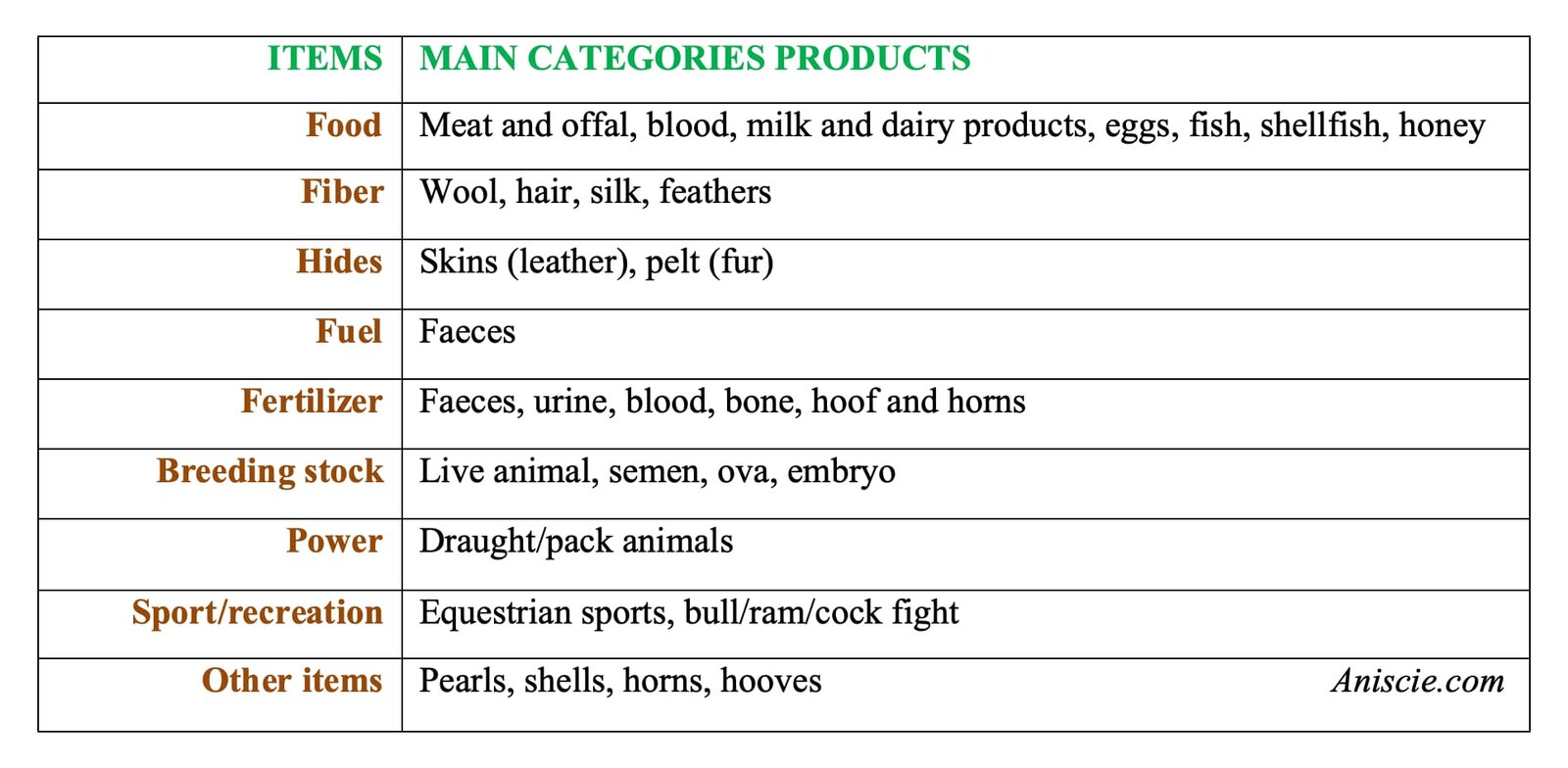
All the products that we obtain from animals can be divided into nine categories (shown in the table below), out of which food items are the main ones. It should not be forgotten that, traditionally, animals facilitate crop production by providing the much-needed draught power and fertilizers. Thus, livestock contribute to all the basic needs of man—food (directly or indirectly via agriculture), clothing, and recreation.
In many developing regions of the world, draught power should be considered an important livestock product, even though its value cannot always be measured directly in production units or monetary terms.
Large numbers of cattle, especially zebu and indigenous types, are still used for agricultural operations, transportation, and rural livelihood activities.
Animal power continues to play a significant role in farming systems where mechanization is limited. Therefore, the relative importance of different livestock species and their various products should not be underestimated in global livestock production systems.
Livestock Development for Rural Development
The role of livestock in the lives of small farmers and the village poor is manyfold, as shown below:
- It buffers the risks due to crop failure, un and underemployment
- Enhances family nutrition status, allows some domestic consumption of essential nutrients
- Provides regular cash income
- Provide services such as draught power, manure, and fuel
- Helps enhance socio-economic status
However, the small farmer faces several constraints in developing his livestock enterprise. Some such constraints are listed below:
- They possess limited resources
- They have limited access to resources, services, technology and market due to their low socioeconomic status
- They mainly depend on subsistence farming for their livelihood
- They are poorly organized
- They are distributed over a wide area, with no/poor transport and communication facilities
- They are often restricted by traditional practices, taboos, and lack of awareness regarding improved technologies