CONTENT
Common Vices (Stereotypic Behaviours) of Livestock Animals
Abnormal behaviours or bad habits shown by animals are known as vices. These behaviours may develop due to hereditary factors, improper management, nutritional deficiencies, overcrowding, stress, continuous confinement, or poor environmental conditions.
Vices are also known as stereotypic behaviours because they are repeated in the same pattern without any purpose.
Vices adversely affect animal health, welfare, productivity, and farm management efficiency. Different livestock species show different types of vices, such as tongue rolling, intersucking, wool eating, and lamb stealing.
Proper feeding, housing, and management practices help reduce the occurrence of these abnormal behaviours in farm animals.
Vices of Dairy Animals (Cattle)
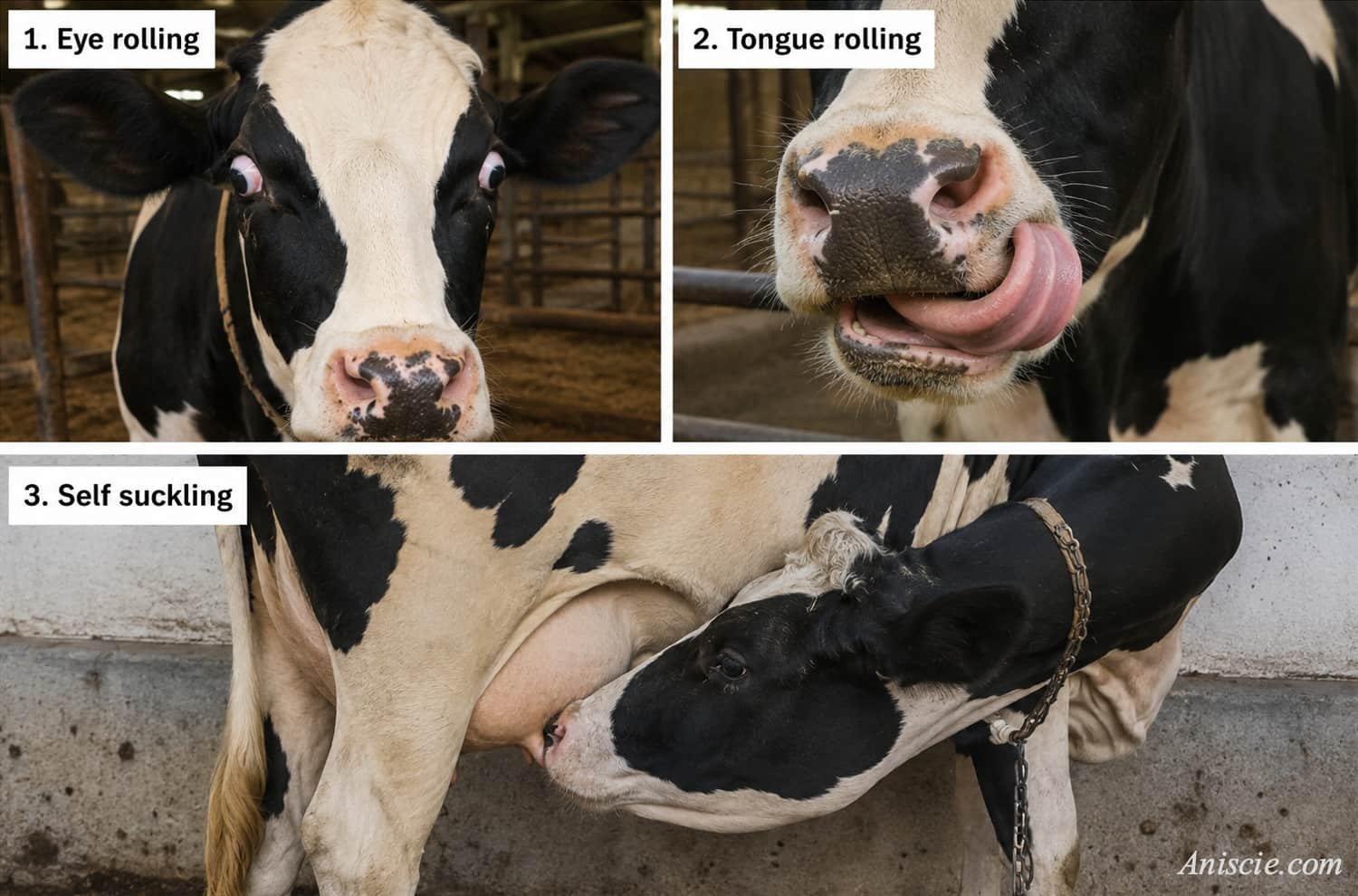
Common vices of dairy animals include eye rolling, tongue rolling, hair eating, sucking and eating solid objects, intersucking by calves, and milk sucking by adult animals.
1. Eye Rolling
The eyes are moved around in the orbit at a time when no visible object is present. It is normally seen in calves confined in crates and standing immobile for extended periods.
2. Tongue Rolling
The tongue is extruded from the mouth and moved by curling and uncurling outside or inside the mouth with no solid material present. This condition occurs in all ages and breeds, but young adult cattle and certain breeds such as Brown Swiss exhibit it most frequently.
Factors responsible for these vices may be hereditary, continuous confinement, and feeding of low roughages. Control methods include the insertion of a metal ring through the frenulum of the tongue, dietary inclusion of a salt mixture, and free movement.
3. Licking and Eating own Hair, Wool
Many young calves housed in individual crates and subjected to early weaning tend to lick those parts of their bodies which they can reach. This results in the ingestion of large quantities of hair, which aggregates into hairballs or bezoars in the rumen. This vice is more common in calves moved from individual pens to group housing.
4. Sucking and Eating Solid Objects
Recently weaned calves will often suck and lick the walls and bars of their pen. This can be controlled by regular creosote painting of wooden surfaces. Feeding good-quality concentrate and roughage will minimize the incidence.
5. Intersucking by Calves
Calves separated from their mothers suck and lick their own bodies, objects in their pens, and parts of the bodies of other calves. They commonly suck on the navel, prepuce, scrotum, udder, and ears of other animals.
6. Intersucking or Milk Sucking by Adult Animals
Intersucking behaviour involves a cow or bull sucking milk from the udder of another cow. Cattle suck milk from herd mates and often choose the same lactating animal.
This vice may lead to loss of milk yield and damage to the teat. Proper feeding management and herd supervision can minimize such incidents.
Vices of Sheep and Goats
Common vices of sheep and goats include wool pulling, wool eating, and lamb stealing.
1. Wool Pulling and Wool Eating
Wool pulling is a form of abnormal behaviour that occurs in sheep within restrictive enclosures and indoor management systems. Overcrowding and deficiency of roughage in the diet are the contributing factors for this vice.
2. Stealing Young or lamb Stealing
Pre-parturient ewes, cows, and mares often approach, sniff, and remain close to the newborn young of other members of the group.
This leads to reduced maternal support to the young, and it becomes weak. In lamb stealing, the foster mother may later reject her own lamb when it is born or may have no colostrum left for it.
In these various situations, the lamb may often die. This problem can be controlled by separating the ewe or cow from the group before and very soon after parturition.
Vices of Pigs
Common vices of pigs include tail biting, belly nosing, and drinker pressing.
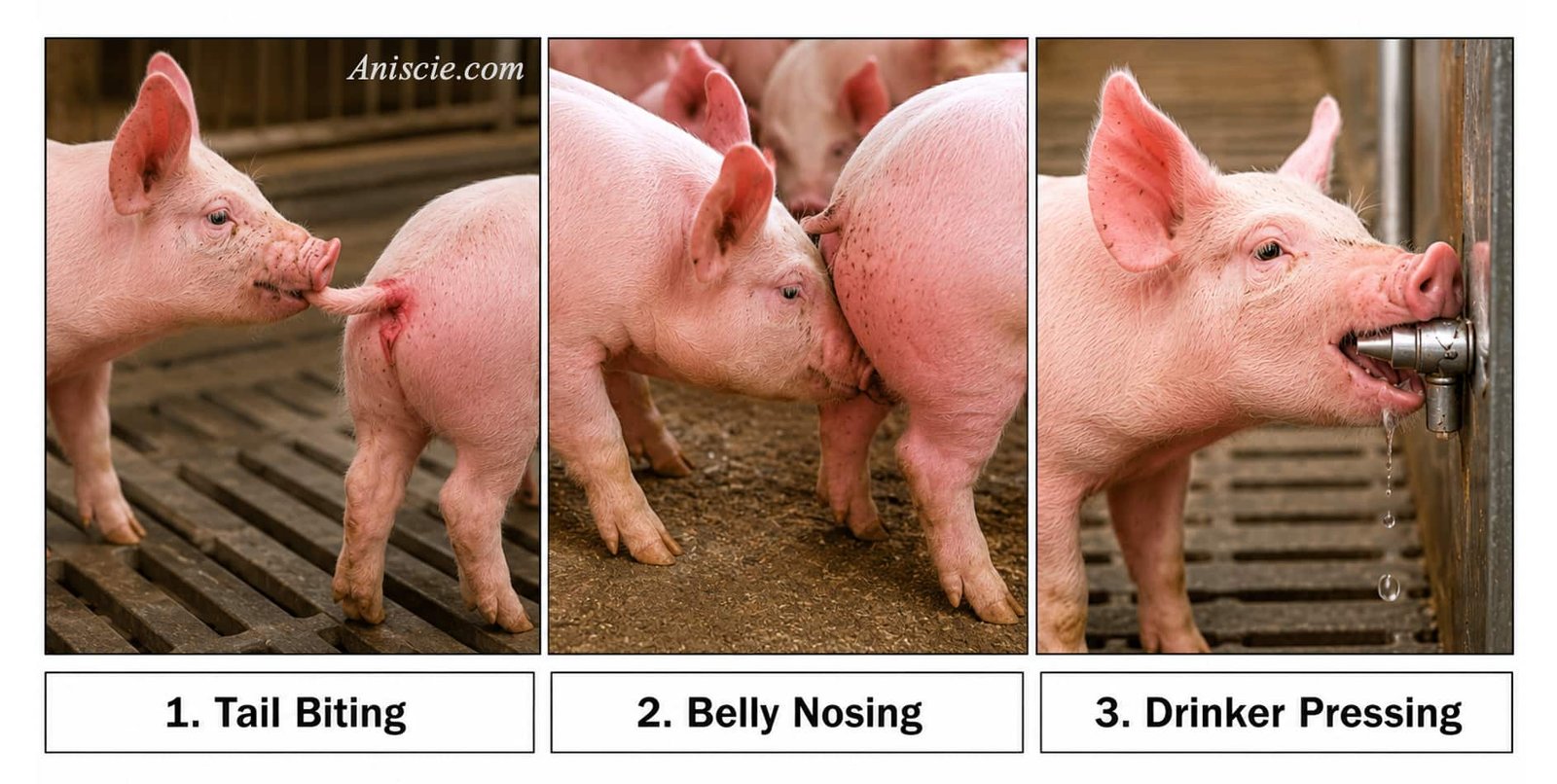
1. Tail Biting
Tail biting is a common vice in pigs in which pigs bite or chew the tails of other pigs. It is usually associated with overcrowding, stress, boredom, nutritional deficiencies, and poor management conditions. Severe tail biting may lead to wounds, infection, and reduced growth performance.
2. Belly Nosing
Belly nosing is commonly observed in early-weaned piglets. In this condition, piglets repeatedly press or rub their snout against the belly or side of another piglet. This behaviour develops due to early weaning and lack of normal suckling behaviour.
3. Drinker Pressing
Drinker pressing is the repeated pressing of automatic drinkers without actually drinking water. This stereotypic behaviour is commonly observed in confined pigs and pregnant sows and is usually associated with restricted feeding and stress.
Vices of Horses
Common vices of horses include wind sucking, crib biting (cribbing), gnawing of walls, jibbing, and weaving.
1. Wind Sucking
Wind sucking is the habit of gulping air repeatedly without taking food or water. It is commonly associated with boredom, confinement, and stress.
2. Crib Biting (Cribbing)
Crib biting or cribbing is a vice in which the horse grasps a hard object with its upper incisors and gulps air. It is commonly associated with stable confinement and feeding management problems.
3. Gnawing of Walls
Gnawing of walls refers to biting or chewing wooden walls, fences, or other hard objects. It may occur due to boredom, nutritional deficiencies, or lack of roughage.
4. Jibbing
Jibbing is the refusal of a horse to move forward and sudden stopping or backing while being ridden or driven.
5. Weaving
Weaving is a stereotypic behaviour characterized by repeated side-to-side movement of the head, neck, and forequarters of the horse. It is commonly seen in confined horses.
Vices of Male Animals
Vices of male animals are behavioural or sexual abnormalities that reduce breeding efficiency and reproductive performance.
1. Masturbation (Onanism)
Masturbation or onanism is a sexual vice commonly observed in horses, bulls, boars, and other breeding males. In pigs, excessive masturbation may lead to a condition called “balling-up,” in which the boar ejaculates into its own preputial diverticulum.
2. Viciousness
Viciousness refers to aggressive behaviour shown by male breeding animals. Such animals may become dangerous to handlers and other animals and are difficult to manage during breeding.
3. Slowness in Breeding
Slowness in breeding is the reluctance or delay in mating activity, often caused by previous bad or painful mating experiences, weakness, stress, or poor management.