CONTENT
Methods of Disinfection in Livestock Farms
Disinfection means destruction of pathogenic micro-organisms from a place so that the place becomes free from infection. Disinfectant, germicide, antiseptic is a substance able to kill organisms and their spores.
Disinfection in livestock farms is an important biosecurity measure used to destroy pathogenic microorganisms and prevent the spread of infectious diseases among animals. Proper disinfection helps maintain farm hygiene, improves animal health, and reduces economic losses in livestock production.
The methods of disinfection mainly include physical, chemical, and gaseous methods. Physical methods involve the use of sunlight, heat, boiling, and flame, whereas chemical methods use disinfectants such as phenol, bleaching powder, iodine, and potassium permanganate. Gaseous disinfection is carried out using gases like formalin and ozone in closed areas.
1. Physical Disinfection
Physical disinfection can be done by the following disinfectants:
- Heat
- Radiation
- Filtration
- Desiccation
Heat
Heat destroys microorganisms by denaturation of their cellular proteins through oxidation. Heat can be used in two forms for sterilization: dry and moist.
Dry heat may be applied in the form of flame (300°C) to floors, walls, and surfaces. Moist heat is far more effective than dry heat. It can be applied in the form of steam. Moist heat is more effective for the disinfection of equipment, utensils, etc.
Radiation
The bactericidal effect of solar radiation due to the presence of ultraviolet rays in sunlight makes it a good disinfectant. Pathogens like Brucella are killed by 4–5 hours of direct sunlight exposure. Artificial UV lamps can also be used for disinfection.
Filtration
The filtration technique has been used to control the microbial population in air, water, and biological materials.
Desiccation
The desiccation process removes moisture from microorganisms, the drying effect varying with the type of microorganisms.
2. Chemical Disinfection
Chemical disinfection is very widely used in veterinary practices because aqueous solutions of chemical disinfectants are easy to prepare. They are cheap and have a broad spectrum of activity. A good disinfectant neither stains nor damages materials. It is free of undesirable odour.
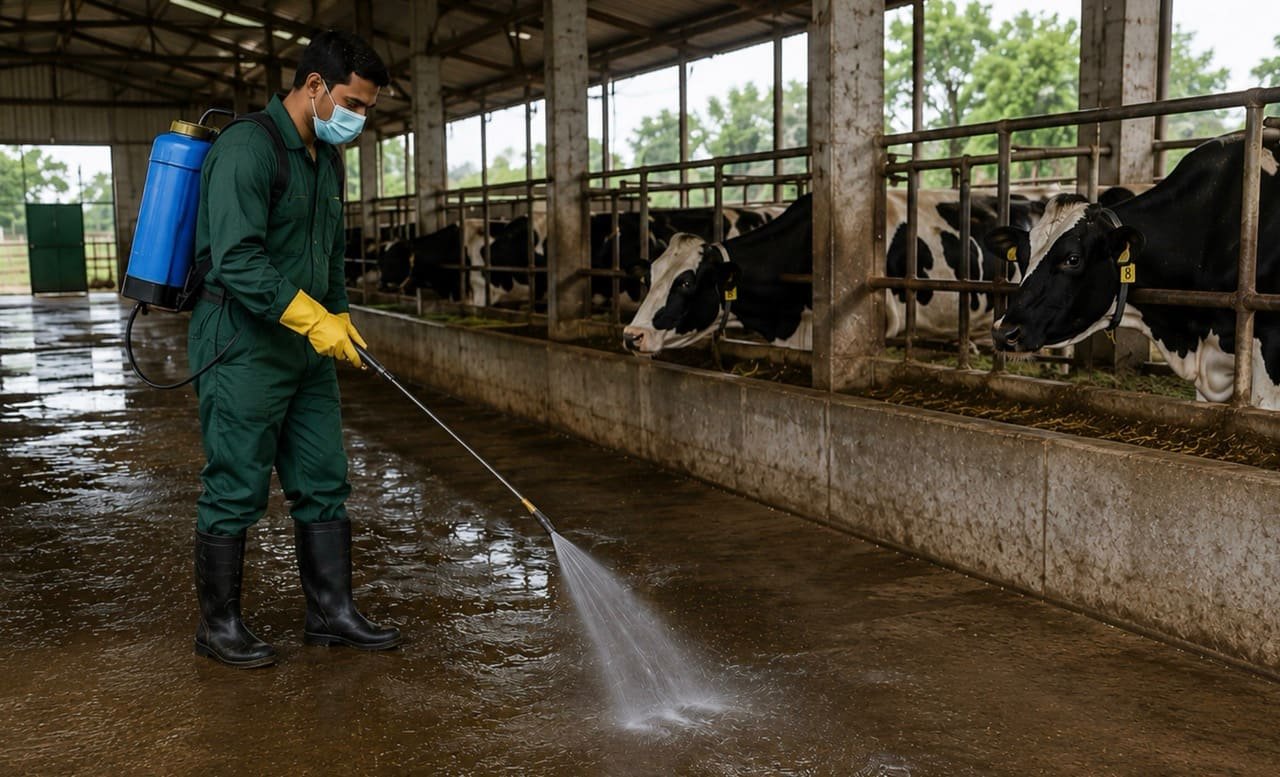
Most commonly used disinfectants fall into one of the major categories mentioned below:
- Acids and alkalis: E.g., boric acid 4–6%, sodium hydroxide (1, 2, and 5% solution) is available as lye for disinfection of animal houses. Calcium hydroxide (lime water and slaked lime).
- Aldehydes: Formaldehyde (5–10%) can be used for washing the floors of animal houses. Glutaraldehyde (2%) aqueous solution is useful for sterilization of instruments.
- Detergents and soaps: These are used mainly for washing. They remove grease, dirt, and other organic matter, which tend to reduce the efficacy of disinfectants. E.g., quaternary ammonium compounds; cetavlon, savlon, etc.
- Halogens: These important groups of disinfectants find wide use in veterinary practices. A process of oxidation following exposure to either chlorine or iodine brings about the destruction of pathogens. Gaseous chlorine, hypochlorite, and organic chloramines are commonly used. Bleaching powder (calcium hypochlorite) is a commonly used disinfectant.
- Metallic compounds: Copper sulfate (5 mg/lit) can be used.
- Oxidizing agents: Potassium permanganate (1–2 mg/lit) can be used.
- Phenols: This group includes cresol (3–5%), Lysol (3–5%), thymol, tar acids, and hexachlorophene. Phenol 0.5 to 5% can be used for farm buildings.
- Bleaching powder (chlorinated lime): It is available in the form of white powder. 1 kg of bleaching powder can be used with 25 litres of water to make a very good deodorant.
- Sodium hypochlorite: It is similar to bleaching powder. It is a powerful germicide in the absence of organic matter.
- Quick lime (calcium oxide): Fresh lime is a good disinfectant. It is used in burial pits to dispose of carcasses and for land application.
- Calcium hydroxide (slaked lime): Commonly used in whitewashing of the walls. It also acts as a disinfectant. While whitewashing, 5% phenol can also be added for greater effect.
3. Gaseous Disinfection
Gaseous disinfection is done with chemicals that are used in gaseous form to destroy pathogenic microorganisms present in animal houses, laboratories, hatcheries, equipment rooms, and other enclosed areas.
These disinfectants are particularly useful for disinfecting places that are difficult to clean manually. Before fumigation, the area should be thoroughly cleaned and properly sealed for effective action.
Formalin gas, ozone gas, and cresol gas can be used in gaseous disinfection.
- Formalin gas is one of the most commonly used gaseous disinfectants. It is produced from formaldehyde solution and is widely used for fumigation of poultry houses, incubators, operation theatres, and laboratories. Formalin gas is highly effective against bacteria, viruses, fungi, and spores. However, it is irritating to the eyes and respiratory tract; therefore, proper ventilation is necessary after disinfection.
- Ozone gas is a powerful oxidizing agent used as a disinfectant in water treatment plants, dairy industries, and livestock farms. It destroys microorganisms by oxidizing their cellular components. Ozone leaves no harmful residue after use because it rapidly breaks down into oxygen.
- Cresol gas and cresol-based fumigants are also used for disinfection purposes in livestock environments. Cresol compounds possess strong germicidal properties and are effective against many pathogenic organisms.
Importance of Disinfection in Livestock Farms
- Prevents spread of infectious diseases
- Maintains hygienic farm environment
- Reduces mortality and economic losses
- Improves animal productivity
- Protects human health from zoonotic diseases